
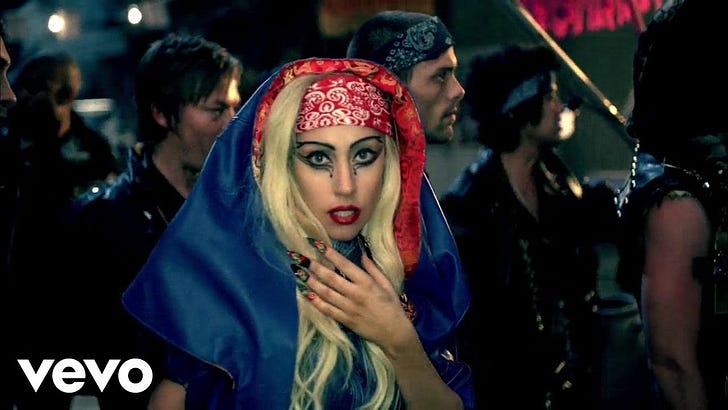

Lady Gaga's Gnostic Revival: Gnosticism, Neoplatonism and the Perversion of Pop Culture
By David Gosselin

I'm just a Holy Fool, oh, baby, it's so cruel
But I'm still in love with Judas, baby…
I wanna love you
But something's pulling me away from you
Jesus is my virtue—
And Judas is the demon I cling to
— “Judas” by Lady Gaga
One of the best ways to examine how ancient Gnosticism has embedded itself in the modern world is to look at “pop culture.”
Debuting her new music video at the 2025 Grammys, Lady Gaga’s latest “Abracadabra” offering features Dionysian tribal dancing frenzies, a death spell, and incantations under “the dark moonlight,” among other things. It’s only the latest example which highlights the quintessential “experiential” dimension of all Gnostic belief.
Always playful and prepared for a general audience, the underlying magic of the these modern incantations comes by way of catchy lyrics, hypnotic rhythms and suggestive visuals. The accompanying music video usually tells its own separate story, offering additional ambiguous layers of meaning which are absorbed into the psyche with the aid of catchy “hooks.”
So what is Gnosticism, really?
Modern Trance-formational Magic
Like a poem said by a lady in red
You hear the last few words of your life
With a haunting dance, now you're both in a trance
It's time to cast your spell on the night
—“Abracadabra” by Lady Gaga
Centered on the notion of “experiential” knowledge (or “gnosis”) and “altered-states” as a sacred rite, experiences of the divine in Gnosticism are presented as trance-formative experiences. Going back to ancient times, these sacred experiences were traditionally overseen by the Greek God Dionysus, or Bacchus.
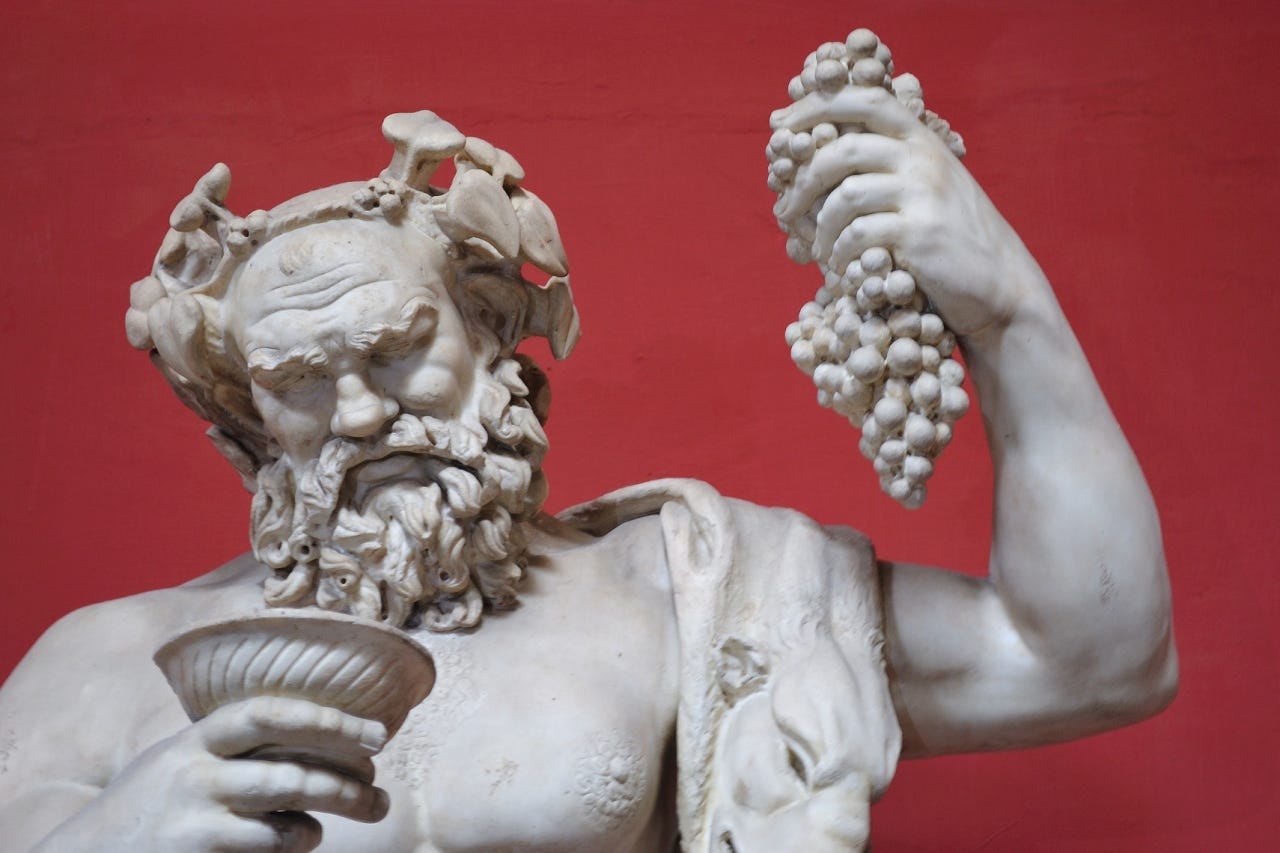
Whether wine, poetry, music, dance or any other kind of magical rite, the god Dionysus was ultimately the god of “altered-states.” Theatre performances, orgiastic revelries, and sacred festivals all fell under the same trance-formational God who allowed human beings to access new states of feeling and consciousness denied by ordinary, waking consciousness.
This, we are told, is what Western civilization largely gave up when it gave into Christianity and modern Western civilization in the aftermath of the 15th century Golden Renaissance.
So Carl Jung describes man’s newfound consciousness of his powers of reason stemming from the Renaissance as something of the original “Promethean sin” of man. In his lecture “The Modern Spiritual Problem,” he writes: “To be ‘unhistorical’ is the Promethean sin, and in this sense modern man lives in sin. A higher level of consciousness is like a burden of guilt.”
Meet the Artists Behind the Artists: From the Doors and Crowley to Lady Gaga and Abramović

Yearly paid subscribers gain full access to both Age of Muses and The Chained Muse, our sanctum for timeless arts and letters.
With the development of a conscious notion of his powers of creative reason, man was supposedly torn from all the previous traditions which he had engaged in during earlier traditional and archaic times where “magic” and the supernatural were integral parts of daily life.
For Jung, a gnostic revival lay at the heart of reconnecting with those “intuitive” forces which lay at the heart of the magic of human existence. The disenchantment and “haunting” of modern man was due to his essentially abandoning magic.
The purpose of psychoanalysis for Jung was only superficially a matter of curing neuroses. The deeper purpose lay in connecting man with those subterranean, unconscious and non-rational, primordial impulses whose denial was the cause of civilization’s modern malaise.
As Jung writes:
“Psychic life always found expression in a metaphysical system of some sort. But the conscious, modern man, despite his strenuous and dogged efforts to do so, can no longer refrain from acknowledging the might of psychic forces. This distinguishes our time from all others. We can no longer deny that the dark stirrings of the unconscious are effective powers—that psychic forces exist which cannot, for the present at least, be fitted in with our rational world-order.”
Jung goes on to explain that the only way to cast off the burden of consciousness is for the full depth of man’s psyche to be brought into the light, which means embracing the darkness as much as the light, lest the the coincidence of the rational and irrational which constitutes the essence of man’s very being become unnaturally severed, leading to phenomena like Hitler or Pol Pot…
So Jung tells us:
“Every good quality has its bad side, and nothing that is good can come into the world without directly producing a corresponding evil. This is a painful fact.”
As he recounts in Memories, Dreams, Reflections, the solution to the problems of reuniting man’s “intuitive” and irrational psychic existence with his rational world-view could be found in the tradition of Gnosticism and Neoplatonism. For these spiritual schools, we are told, recognized the unity of intuitive knowledge and the higher divine “Unity” of all reality, which was the true source of salvation for mankind.
Jung writes of his discovery of “alchemy” as the magic link to ancient wisdom in the modern world:
“As far as I could see, the tradition that might have connected Gnosis with the present seemed to have been severed, and for a long time it proved impossible to find any bridge that led from Gnosticism—or neo-Platonism—to the contemporary world. But when I began to understand alchemy I realized that it represented the historical link with Gnosticism, and that a continuity therefore existed between past and present. Grounded in the natural philosophy of the Middle Ages, alchemy formed the bridge on the one hand to the past, to Gnosticism, and on the other into the future, to the modern psychology of the unconscious.”
From pop psychology to modern mysticism and the esoteric underground, today Hermetic, Gnostic and Neoplatonic mystery schools abound not only in particular spiritual and cultural movements of our age, but are arguably most present and visible in “mass culture.”
Neoplatonism and the Subversion of the Renaissance
Choose the road on the wеst side
As the dust flies, watch it burn
Don't waste time on a feelin'
Use your passion, no return
—“Abracadabra” by Lady Gaga
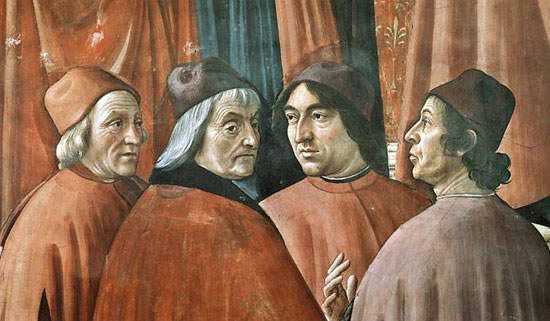
Interestingly, while often thought of as the herald of a new age of rational inquiry and faith based on Reason, the period known as the Italian Golden Renaissance also saw a curious revival of occult mysticism under the guise of Renaissance “Neoplatonism.”
This “Neoplatonic” rebirth was spearheaded by the likes of Marsilio Ficino, a physician and supposed Catholic priest with a strange predilection for sympathetic magic, Orphic hymns and alchemical thought. Central to his new syncretic form of pseudo-Christian and pseudo-Platonic mysticism were gnostic texts couched in the language of Egyptian mystery schools i.e. the teachings of Hermes Trigmegistus.
As Frances Yates writes in Giordano Bruno and the Hermetic Tradition:
“The Hermetic science par excellence is alchemy; the famous Emerald Table, the bible of the alchemists, is attributed to Hermes Trismegistus and give in a mysteriously compact form the philosophy of the All and the One. In the Renaissance, a new style “Alchymia” becomes associated with the new Magia and Cabala.”
In these teachings we’re told the divine is everywhere, that no essential separation exists between the sacred and profane, the earthly and the divine, above and below. As the Emerald Tablet of Hermes tells us: “All is One and One is All.”

This was all supposedly presaged by the legendary Egyptian priest Hermes Trismegistus, whose revelations were recounted in one of the central texts of the Hermetica, the Pimander.
As Yates describes, one of the warnings given by Hermes is that in times to come men would stop regarding the world as sacred:
“In that hour,” the so-called Egyptian Moses warns, “In that hour, weary of life, men will no longer regard the world as the worthy object of their admiraition and reverence. This All, which is a good thing, the best that can be seen in the past, the present and the future, will be in danger of perishing; men will esteem it a burden; and thenceforward this whole of the universe will be despised and no longer cherished, this incomparable work of God who, without envy, lavishes his favour upon his work, in which is assembled in one and all, in a harmonious diversity, all that can be seen which is worthy of reverence, praise and love.” Thus Egypt, and its magical religion, becomes identified with the Hermetic religion of the world.”
According to Yates, Ficino the pious Catholic doctor doubled as a magician fascinated by the possibility of linking the earthly and the divine through a chain of mystical practices which would allow man to ascend to the consciousness of a universal Unity animated by a world soul or “spiritus mundi.”
“Ficino’s magic is based on a theory of spiritus which has been admirably defined by D.P. Walker, to whose book the reader is referred for a full and scholarly discussion of this subject. Ficino bases the theory of how we are to “draw down the life of heaven” upon the spiritus as the channel through which the influence of the stars is diffused. Between the soul of the world and its body there is a spiritus mundi which is infused throughout the universe and through which the stellar influences come down to man, who drinks them in through his own spirit, and to the whole corpus mundi.”
Zooming out, we can observe that the question of the sacredness of the world and how one resolves the paradoxes of the earthly and the divine, the material and the spiritual, lies at the heart of the spiritual question in the modern West and the eternal enmity existing between Christianity and Gnosticism.
The World Needs a Renaissance—Not a Reset II

“And men go abroad to admire the heights of mountains, the mighty waves of the sea, the broad tides of rivers, the compass of the ocean, and the circuits of the stars, yet pass over the mystery of themselves without a thought.”
It’s useful here to recall the work of the Stanford Research Institute and its “Changing Images of Man” project where the question of “salvation” and its source is treated as one of the central problems to be resolved if a new syncretic image of man is to replace the traditional Judeo-Christian Renaissance image.
The authors write:
“The Gnostics, whose beliefs appear to have been a synthesis of Babylonian, Indian, and Egyptian, as well as Semitic and Zoroastrian thought, took another view. Agreeing with the Semitic belief in one Eternal and Supreme Being, and the Zoroastrian view of the World and its unredeemed citizens as savable, the Gnostics took as central ‘saving’ power of gnosis-extraordinary and experientially intimate knowledge of the mysteries of existence.”
The authors further outline the relevance of this question by comparing and contrasting the various views of salvation that have animated the warring spiritual traditions within the Western world:
“The import of this view, as contrasted with the view which ultimately came to be the ‘official’ one, is portrayed by the Gospel according to Thomas: His disciples said to Him: When will the Kingdom come? Jesus said: It will not come by expectation; they will not say: ‘See there.’ But the Kingdom of the Father is spread upon the earth and men do not see it. (Saying 113) This tension between the Gnostic understanding of apocalyptic symbolism and that of the Early Church which condemned it as heretical is the essence of what is sometimes called "the Judeo-Christian Problem." Is an apocalyptic Messiah to come (or come again) and thus grandly save the elect from evil, or is the ‘Kingdom of the Father’ already here within us, within ourselves and our world-as is ‘Buddha-consciousness’ and the ‘Mother Light’-only waiting to be recognized and fulfilled?”
The question ultimately comes down to whether man, as a finite mortal being who is yet endowed with an immortal spark can achieve absolute salvation in this life, or if a transcendent reality exists which he may participate in but can never fully achieve within the bounds of his mortal existence. In the former, men can essentially become gods, while in the latter men are living images of God.
In other words: is there a distinction to be drawn between the finite condition of man’s material existence and the infinite world of his spiritual self, or can all of it be united and transcended such that man may become a fully self-actualized being through the saving power of “gnosis”?
Chief among the pioneers of the Gnostic current in modern times was the Esalen Institute. Inspired by the likes of Aldous Huxley and his final “spiritual” novel, Island, a one Friedrich Spiegelberg was also credited as the spiritual godfather of a new secular “religion of no religions.” This new religion saw no separation between the earthly and the divine, the sacred and the profane, but that essentially All is One and One is All.
As the official biographer of the Esalen Institute, Jeffrey Kripal, writes in Esalen: A Religion of No Religions:
“There are three historical traditions that Spiegelberg singles out as particularly suggestive of the religion of no religion: Zen Buddhism, which he always saw as a prototype of the religion of no religion; western alchemy, which recognizes that salvation is ultimately a matter of matter and body; and Indian yoga, which recognizes, particularly in its Tantric forms, that the final temple of the divine is, again, the human body.”
Combined with Neoplatonism and its emphasis on the multitudinous expressions of a spiritual Eros, we start to get a clearer image of what a modern mystery school looks like, or what the early Church Fathers of Christianity sought to repel with various doctrinal arguments to distinguish various spiritual practices, experiences and beliefs. For while ostensibly similar, their impact on man’s self-image and purpose lead to vastly different worlds.
One school would have people believe that All is One and One is All, such that there were essentially no difference between the material and spiritual, the mind and the body, reason and instincts. Eros and its many manifestations were all an invitation to ascend. The carnal was essentially sacred and the sacred was essentially carnal.
In reality, Neoplatonic thought, which was used to champion the powers of “Eros” as a divine force for spiritual ascendency was from its outset conceived as a perversion of the concept of love elaborated by Socrates in Plato’s Symposium. Neoplatonic mysticism would offer a theory of the soul’s journey through the many levels of reality as an essentially erotic journey whose chief dimensions were “spiritual.” The goal of a human spiritual journey was not so much to do good, or be a good person, so much as to achieve higher levels of “consciousness” or “gnosis.” Of course, those who attained these higher levels had to pass through a variety of exclusive mystery rites.
In this context, we can appreciate Jung’s discussion of Neoplatonism in tandem with Gnosticism as substantiating his own insights into the “psyche.” For Jung, the resolution of modern man’s spiritual crisis was essentially a matter of the alchemical transmutation of spirit and matter into a higher unity or One. The access point was Eros, which Jung believed Freud had narrowed into a limited purely sexual notion, rather than a higher “spiritual” journey for which sensual eros was merely an access point.
As Jung says in the “Modern Spiritual Problem”:
“This had been inaugurated by Freud, who had introduced along with it the classical Gnostic motifs of sexuality and the wicked paternal authority. The motif of the Gnostic Yahweh and Creator-God reappeared in the Freudian myth of the primal father and the gloomy superego deriving from that father. In Freud’s myth he became a daemon who created a world of disappointment, illusions and suffering. But the materialistic trend which had already come to light in the alchemists’ preoccupation with the secrets of matter had the effect of obscuring for Freud that other essential aspect of Gnosticism: the primordial image of the spirit as another, higher god who gave to mankind the krater (mixing vessel), the vessel of spiritual transformation.”
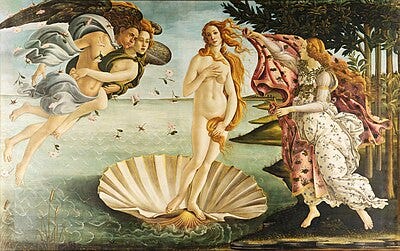
During the Renaissance, the unleashing of a new age of “free inquiry” also involved a renewed subversion of Judeo-Christian ideals with precisely this alchemical idea. As Jung himself acknowledged, these essential ideas were rooted in the ancient mystery schools of Gnosticism and Neoplatonism (of which the Emperor Julian the Apostate was a chief proponent as a Mithraic initiate).
As even a Theosophy Wiki will tell us, Neoplatonism was itself the precursor to modern Theosophy by Satanist and Theosophical School founder Madame Blavatsky:
Neoplatonists would have called themselves students of Plato. Helena Petrovna Blavatsky would have called Neoplatonists Theosophists. From The Keys to Theosophy she states: “The name Theosophy dates from the third century of our era, and began with Ammonius Saccas and his disciples who started the Eclectic Theosophical system.” “They (Neoplatonists) were the Theosophists of early centuries."[1] Ammonius Saccas was the first to use the term "theosophy," which means "divine wisdom," combining "god" or "divine" (theos) and wisdom (sophia).
Neoplatonists did not use the label "neoplatonists." They felt themselves to be interpreting Plato, not altering his teachings. However during the 19th Century, historians and philosophers decided that the beliefs of this group differed sufficiently from Plato’s original ideas to require the prefix “neo,” meaning “new”, to the root word. This school of thought began in the third century AD in Alexandria by followers of Ammonius Saccas. Ammonius was born to devout Christian parents and he was officially educated at Christian schools but he rejected the exclusive narrowness of his parents Christianity, claiming that he was “god-taught.” He took a far more expanded view of religious philosophy than any one religion could offer.
Saccas believed that knowledge consisted of three grades, ascending from mere opinion derived from sense perception, to science gained through dialectic, to illumination gained from direct spiritual intuition.
Today, pop culture may be best understood by its emphasis on the experiential dimensions of reality, and creating those heightened states of emotion which invite audiences to access an infinite number of new “altered-states” of reality. This incantatory magic becomes the means of experiencing new states of consciousness and ultimately attaining sacred “gnosis.”
Abracadabra?
Phantom of the dance floor, come to me
Sing for me a sinful melody
—“Abracadabra” by Lady Gaga
As we listen to the latest Lady Gaga offering, a few questions come to mind: “who is going to save her?” Is it dance, Dionysus, or something else? Is she an offering or a sacrifice?
And what of the incantation, “abracadabra?” Yes, it’s often used in stage magic, has been repeated in countless cartoons and television shows. It all depends on which interpretation and variation we rely on. However, in light of the intentional ambiguity and deliberate “gaps” in the messaging around Gaga’s incantation, and the fact the spell has several variations throughout the song, several potential meanings arise.
Is it a healing spell, or a death spell?
Variations like “Abrahadabra” are associated with none other than Thelema and Aleister Crowley:
“In the early 20th century, the occultist and mystic Aleister Crowley introduced a modified version of “Abracadabra” known as “Abrahadabra” within his spiritual system called Thelema. Drawing inspiration from ancient mystical traditions and personal revelations, Crowley saw “Abrahadabra” as a word of immense power and cosmic significance.”
According to Crowley, “Abrahadabra” represented the union of opposites, embodying the formula of achieving spiritual and magical balance. He assigned numerical values to its letters, connecting it to the number 418, which he associated with spiritual attainment and the attainment of the True Will.
The modern interpretation of “Abrahadabra” within Thelema emphasizes the integration of various aspects of the self, the harmonization of conflicting forces, and the manifestation of one’s true purpose and potential. It serves as a mantra and a symbol of spiritual transformation within the Thelemic tradition.
At the heart of all gnostic belief is the worship of the magical transformative powers of experiential “gnosis,” which have their primordial roots in sex and magic rituals. The audience is invited to set aside their limited powers of reason and be led by the “intuitive” forces of higher powers. These initiatory processes are supposed to lead the way to genuine enlightenment, whether through dance, music, poetry, or perhaps all those combined with a few other things?
A precondition is that one leave his reason behind and embrace magical forces—both their light and darkness, as Carl Jung the physician reminds us. For only then can opposites be reconciled into a higher “Unity.”
Where Neoplatonic mysticism promises the attainment of Unity through the magic of Eros and “intuitive” introspections, or Lady Gaga sings magical incantations and confesses her dual love for Jesus and Judas, the magic of Gnosticism isn’t hard to find.
One has to decide whether they’ve been led to Truth or lulled into an endless labyrinth of “experiential” knowledge and “intuitive” mystical practices by clever sorcerers who have perhaps managed to convince most people that such magic doesn’t even exist.
Now, you must choose: dance or die?
Originally published here.
Meet the Artists Behind the Artists: From the Doors and Crowley to Lady Gaga and Abramović
Paid subscribers gain full access to both Age of Muses and The Chained Muse, and can download our journal of timeless arts and letters, New Lyre Magazine.
Lifting the Veil: From Ancient Rhetoric to Modern Psyops — How the Magicians Are Destroying the Republic

Rhetoric, propaganda, and the “magical” qualities of language have been used as a means of controlling mass opinion for thousands of years. First codified by Aristotle in his Rhetoric, the art of using language as a means of persuasion and increasing suggestibility has been at the heart of the struggle for political power since the early days of Western…
I at First was going to erase this piece but thought better of it. As Sun Tzu believed, to paraphrase, one must know one’s enemy to ever be able to defeat them. It is sad to me, that we as a people, have succumbed to being perpetually led into the weeded field on a merry , fruitless chase after glowing and shiny things that are only a trap of illusions to part us from ever truly understanding GOD and ourselves in HIS world.
We Have to Remain ever Vigilant against the powers of Darkness that rule mortal existence. To my mind, they are as waiting, hungry vultures who wish to literally Consume the entirety of this world.
Pray for wisdom and good judgement in the face of those who wish us all harm.
It’s interesting that I end up disagreeing with you so much. We have the same subject matter that we interpret differently. In the Latin West there was only one book of Plato and that was the Timaeus. It included the musical ratios as part of the understanding of how harmony was formed from chaos, comparable to Genesis when the spirit moved over the waters, etc. So in the Latins, Platonism goes back to Calcidius commentaries in the 4th century, who translated the Greek into Latin. Boethius is also very engaged in mathematical speculations. All of this ended up in the scientific revolution, which really came from neoplatonism. The Aleister Crowley thing largely came out of Polish based Jacob Frank—a kind of metaphysical nihilsim that emphasized the descent rather than the ascent. Nearly all contemplative Neoplatonism emphasized the ascent through a method of assertions and negations, a method that goes back to Pseudo-dionysius, a 5th century Assyrian. Not to Dionysius the god of drunkenness.