
Landing
By John H.B. Martin

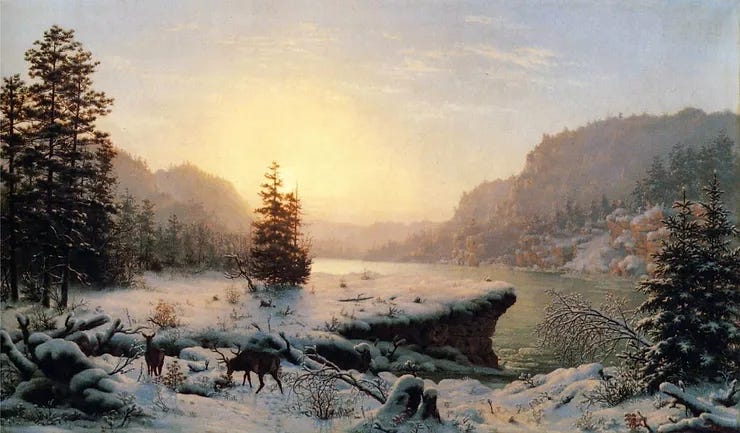
As soft as snowdrops snowflakes settle;
more soft than petals, gently fall…
Less shy than snowdrops snow drops all
its inhibitions… Cold as metal
not to the touch alone, but sight
as well, and every other sense
but one: that sense of wonder, flight
can wake in some, made more intense
by stars that turn to flowers, then, gently,
dissemble all that circles round
less tremblingly, till, indistinctly,
another Eden touches down.
John H.B. Martin is a poet who lives in London, England. He is a graduate of London University and Australia National University and has been writing for many decades. He has written four novels and is working on a fifth. His magnum opus is a six-volume epic poem. Most of his work is yet to be published.
Featured in New Lyre - Winter 2024
Download or order the latest issues of our print journal, New Lyre Magazine
“The Artist, it is true, is the son of his age; but pity for him if he is its pupil, or even its favorite! Let some beneficent Divinity snatch him when a suckling from the breast of his mother, and nurse him with the milk of a better time that he may ripen to his full stature beneath a distant Grecian sky. And having grown to manhood, let him return, a foreign shape, into his century; not, however, to delight it by his presence; but terrible, like the son of Agamemnon, to purify it. The matter of his works he will take from the present; but their Form he will derive from a nobler time, nay from beyond all time, from the absolute unchanging unity of his nature. Here from the pure aether of his spiritual essence, flows down the Fountain of Beauty, uncontaminated by the pollutions of ages and generations, which roll to and fro in their turbid vortex far beneath it.”
—Friedrich Schiller, Ninth Letter on the Aesthetic Education of Man
There is a fabliau which exists in OF and Latin versions. It is often given the tile of The Snowdrop. It tells of a Suabian merchant who goes off on a long business trip. When he returns his wife sports a child whom she explains by saying it came with the snow. The Suabian says nothing. Time passes, and he tells his wife he will go off on another long business trip. This time the snow child will accompany him. Many months pass. Eventually the Suabian returns, but without the snow child. His wife asks the boy's whereabouts, and her husband, the Suabian replies that the boy spent too long a time in the midday sun and melted away.
That's a truly lovely poem.