

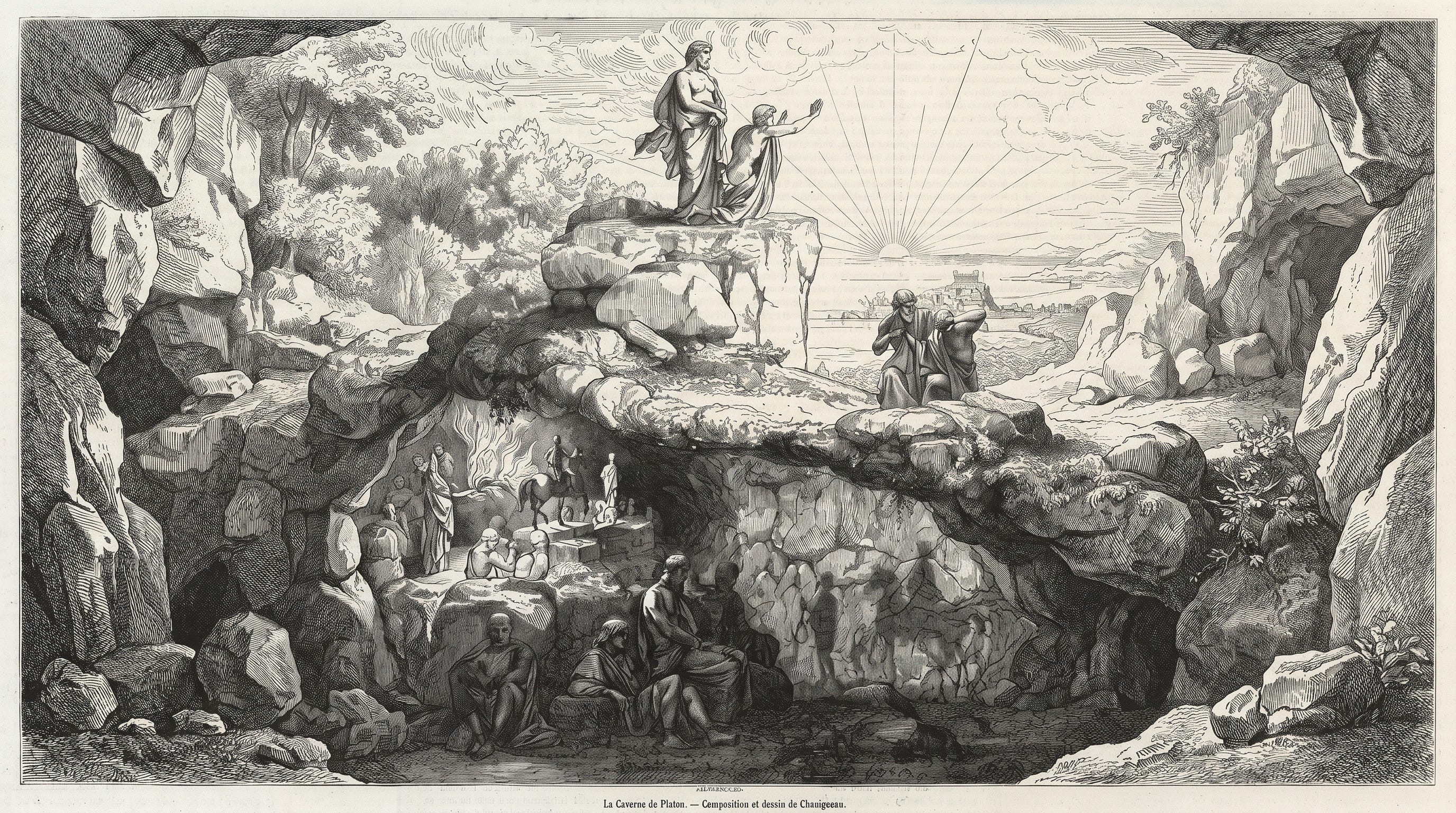
Over 2300 years ago, Plato challenged the poets of the ancient world: would those who excelled in the art of image-making become capable of leading their audiences out of the cave? Or would they choose to simply remain inside the cave and make themselves useful — by making the shadows more delightful?
In Plato’s time, the poets had the most popular and influential platform by which to spread their message: the Classical Greek stage. They were quoted by philosophers, statesmen and rhetoricians alike in order to give their arguments and speeches a semi-divine authority, much like one might try to “scripture proof” his argument in order to appear superior in his discourse.
So Plato knew that the songs and images of the poets shaped the emotional and spiritual matrix of Ancient Greece, much like mass media and film have shaped the images of the twentieth and twenty-first century. He recognized that any serious statesmen who ignored the role of art and image-making in his society was doomed to watch his Republic get swallowed by the sands of time.
For those reasons, it became clear to Plato after his short-lived political ambitions that the absence of Lady Philosophy from the stage would inevitably lead to great danger. For what good could come from depictions of passion, war, vengeance and other spectacles if Lady Philosophy wasn’t give her own rightful voice and stage-time? How would the majority of audiences even know how to feel about the others in the absence of Her discerning light?
As Plato recognized, the political turmoil, disastrous wars and corruption of Classical Greece were simply downstream consequences of having neglected Lady Philosophy in the first place.
Today, we can observe that our own twentieth century is also a perfect dramatization of precisely the kind of tragedy described by Plato.
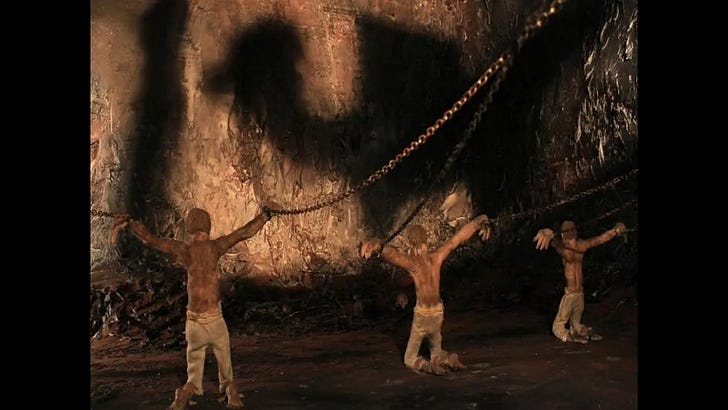
Plato had asked a very fair question: could the power of the poets’ charms perhaps be used to entice or invite audiences to seek reality outside the cave? Or were these image-makers ultimately no different than mere rhetoricians or sophists? That is, if rhetoricians were judged on how eloquently they spoke and sophists on how erudite they sounded, then poets could simply be judged based on how well they crafted images and how strongly those images made people feel.
In Plato’s ideal Republic, however, poetry wasn’t simply a matter of how well-crafted your poetical images were; poetry was not above Truth or morality. Further, he argued that Wisdom, Sophia, should not only be loved by Philosophers proper, or by poets and a few other initiates, but by everyone. And poetry, the realm of music and image-making, was arguably one of the most powerful means by which to expose larger audiences to the higher questions of Truth, Justice, Beauty and Goodness. For poets had the power to make said Truth more delightful and memorable, to give the highest virtues both a mesmerizing sound and form.
Thus, the theatre was where Greeks could go to not only to be entertained by such poetry and drama, but to be cultivated, to learn of their history, their gods, their own psyches, and their civilization — and how they should actually feel about all these things.
Answering Plato’s Challenge
Recognizing Plato’s insights, Friedrich Schiller in his ninth letter on The Aesthetic Education of Man wrote about Beauty’s role in fully cultivating both the heart and mind through fine art:
“The seriousness of your principles will frighten them away from you, but they will accept them in play; their taste is more chaste than their heart, and that is where you must take hold of the shy one who is fleeing you. You will besiege their maxims in vain, to no avail will you condemn their deeds, but you can try your formative hand with their indolence. Chase away what is arbitrary, the frivolity, the crudeness from their pleasures, and in that way you shall banish these, unnoticed, from their deeds and finally their beliefs. Wherever you find them, surround them with noble, with grand, with brilliant forms, surround them with symbols of what is excellent, until the appearance vanquishes reality, and art vanquishes nature.”
Schiller and Shelley would answer to Plato’s challenge in the 18th and 19th century, arguing that when wrapped in poetry’s magical garbs, Truth could be softened and beautified, such that it might welcome rather than frighten larger audiences.
So today we ask the same question: can and should poets be tasked with creating more than just well-crafted images and temporary cathartic states, which was the essential standard proffered in The Poetics by Plato’s most famous detractor, Aristotle?
In a word: should poets simply content themselves with making the images on the cave wall more delightful, or has the time once again come for poets to heed the famous maxim, sapere aude (dare to be wise) and answer Plato’s challenge?
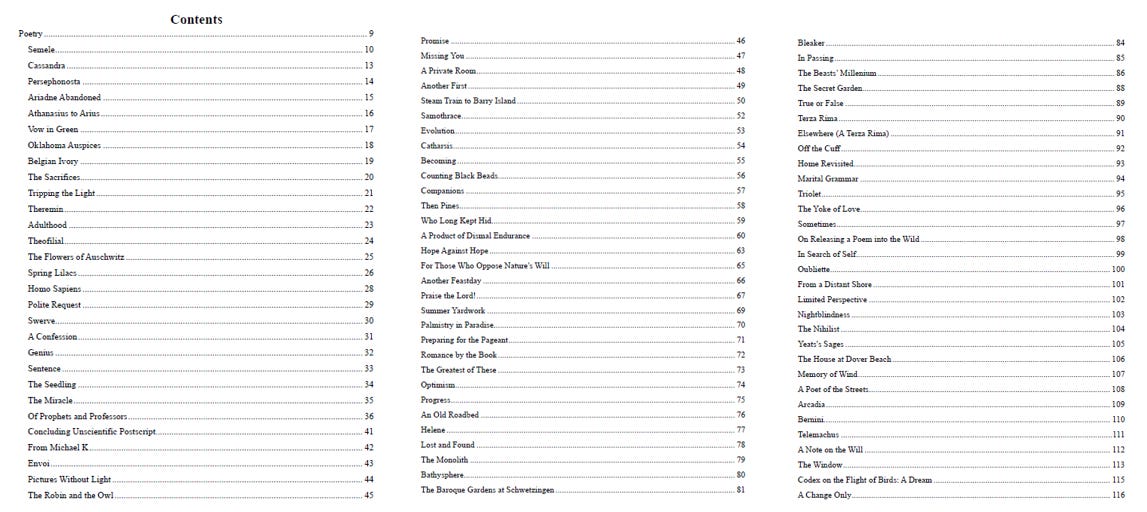
Today, we offer our own answer to Plato’s challenge with our ninth issue of New Lyre Magazine.
We’re proud to feature a new and very formidable roster of visionary image-makers who have not shied away from Plato’s exacting challenge, but have each done so in their own distinct and original style.
We therefore invite you all gently to read, and kindly to judge, our journal.

Details
174 pages pages
16 contributors
Three original short stories
Over 100 original poems and 12 new translations

Full Access: New Lyre Magazine

Paid subscribers can download all issues of our New Lyre Magazine at the bottom of this page.