
Western Oikophobia, A Study
by Alex Syd

Richard Prince is a salient figure informing the cultural and spiritual sensibility of modern liberalism. The October 2025 Vanity Fair article, Richard Prince’s Last Stand, by Nate Freeman, describes Prince as an appropriation artist – a type of art to which he added a new dimension in the 1980’s. Appropriation itself is now becoming even more relevant and controversial with artificial intelligence (AI) scraping writers, artists and actors work in cyberspace.
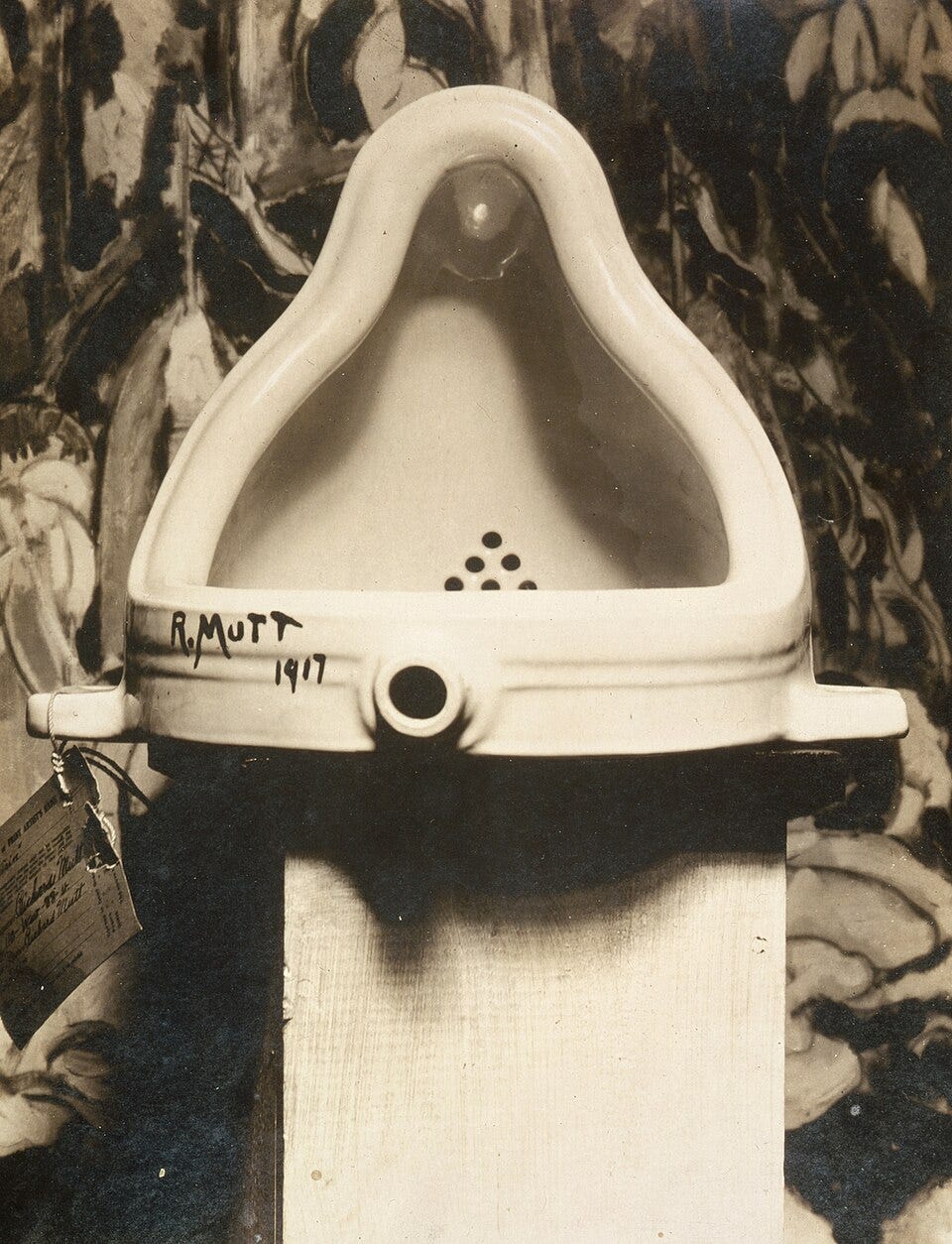
Prince has perfected the art of using found objects, both real world and lately cyber. Found objects were introduced to the Modernist psyche by Marcel Duchamp around 1913 in a movement called Dada. Found objects are images or objects taken out of context by putting them in an art gallery. By doing so they are elevated to become an ironic comment on what the image represents, which then transforms the individual who appreciates the irony, and is therefore “in” on the joke. Duchamp’s first found object was a urinal “signed” by R. Mutt. Prince’s first found objects were magazine covers which he photographed.
The Freeman article is a hagiography. Quoting Larry Gagosian “the world’s most prominent art dealer,” Prince is a genius. Gagosian also says Prince is “one of the great artists of his generation and maybe the defining cultural artist.” Freeman describes Prince as “constantly breaking the rules” while simultaneously able to garner $3 million for photos selling at auction and one painting selling for up to $12 million. Artnet.com lists Prince as number 5 in its September 25, 2025 article on the 10 Top-Selling Living American Artists clocking in at $661.8M. Apparently, breaking the rules is quite lucrative.
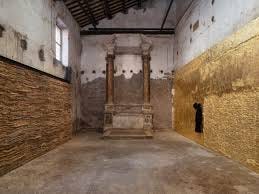
His upcoming dual show with fellow appropriation artist Arthur Jafa at the Fondazione Prada in Venice is featured in the article. Jafa, who is black, bestowed perhaps the greatest blessing any Modernist could hope for: “Richard Prince is clearly the blackest white artist out there.” Later, Prince will take over Museo Jumex, the David Chipperfield-designed private museum founded by art-collecting fruit-juice billionaire Eugenio López Alonzo. In the summer of 2025 Prince installed a video at the altar of a thousand-year-old deconsecrated church in Rome. I’ll get to the video later.
One could safely say the 76-year old Prince has reached the equivalent of a Christian saint in modernist culture. He is a master of Dadaism – of emptiness and irony. He makes tons of money. He had a full-museum show at the cultural gatekeeper Guggenheim Museum called Spiritual America, in 2007. And above all else he has been verbally anointed by a high status black man as being a black man, 2nd class.
This is the essence of what Roger Scruton calls oikophobia:
An extreme and immoderate aversion to the sacred and the thwarting of the connection of the sacred to the culture of the West appears to be the underlying motif of oikophobia; and not the substitution of Hellenic Christianity by another coherent system of belief. The paradox of the oikophobe seems to be that any opposition directed at the theological and cultural tradition of the West is to be encouraged even if it is “significantly more parochial, exclusivist, patriarchal, and ethnocentric”. (Mark Dooley, Roger Scruton: Philosopher on Dover Beach (Continuum 2009), p. 78.
Which brings us to Prince’s apogee or maybe ascension, The Deposition, the aforementioned video installation at the altar of the deconsecrated Christian house of worship. The dealer who staged the show, Gavin Brown, is a fellow Prince “devotee” and partner with Barbara Gladstone of the Gladstone Gallery. He describes Prince as an anarchist and considers Deposition to be “one of the great artworks of our era and one that, in its conceptual rigor and imposing length, is something of a key to the entire Prince ecosystem.” To quote Brown further: “It’s the first time where you feel Richard Prince is wearing his heart on his sleeve,” Brown said. “But then you wonder, is it his sleeve or just a photograph of somebody else’s sleeve?
Watch Prince perform his “Deposition”
So, what is this great artwork? Prince has faced multiple lawsuits from professional photographers. Most he loses and at least one he won. The Deposition is a 6 1/2 hour video recording of Prince at a law firm’s office. The lawyers are off camera with Prince as the only subject. Is Prince infringing on copyright law? His defense is that he’s an artist and commercial photographers aren’t, which is odd considering one of the main tenets of Modernism is that anyone can be an artist, that there is no such thing as high and low culture. Hence, the appropriation of banal commercial images and objects by Prince himself. He says the photographers are just sent out on assignment while he, the artist, is allowed to define the meaning of any object by taking it out of context – as determined by Duchamp.
Therefore, a shoehorn can be anything the artist wants it to be. After all, all art is a lie. The image of a landscape isn’t an actual landscape, it’s paint or ink on canvas or paper. This is all correct but has nothing to do with copyright law. Instead, Prince suddenly becomes the heretic bohemian, heroically fighting the squares.
Freeman writes:
“If Prince’s oeuvre is the secret history of America as seen through the radical politics of its counterculture, this was the skeleton key.”
The Deposition is installed in a deconsecrated church. Prince is therefore mimicking a traditional Western sacred space in its former precinct with his own story of victimhood as a video performance on a glass screen. The visible world can now only exist by the operation of “objectification” through the intellect:
There is nothing real outside ourselves; there is nothing real except the coincidence of a sensation and an individual mental tendency. Be it far from us to throw any doubts upon the existence of the objects which impress our senses; but, rationally speaking, we can only experience certitude in respect of the images which they produce in the mind. (Herschel B. Chipp, ‘’Theories of Modern Art’‘, Albert Gleizes and Jean Metzinger, from Cubism, 1912 (University of California Press, 1968) pp. 207-213.)
In his book, ‘’Roger Scruton: Philosopher on Dover Beach,” Mark Dooley describes oikophobia as centered within the Western academic establishment on “both the common culture of the West, and the old educational curriculum that sought to transmit its humane values.” This disposition has grown out of, for example, the writings of Jacques Derrida and of Michel Foucault’s “assault on ‘bourgeois’ society result[ing] in an ‘anti-culture’ that took direct aim at holy and sacred things, condemning and repudiating them as oppressive and power-ridden.” (Dooley, p. 78)
This type of art perversely mirrors the early Christian belief in the power of relics. Relics were parts of saints’ bodies or something like pieces of the cross on which Jesus was crucified. The relic had to perform a miracle, like healing, or be certified by a high-ranking cleric. Relics were highly prized by churches and conferred high status on the surrounding community.
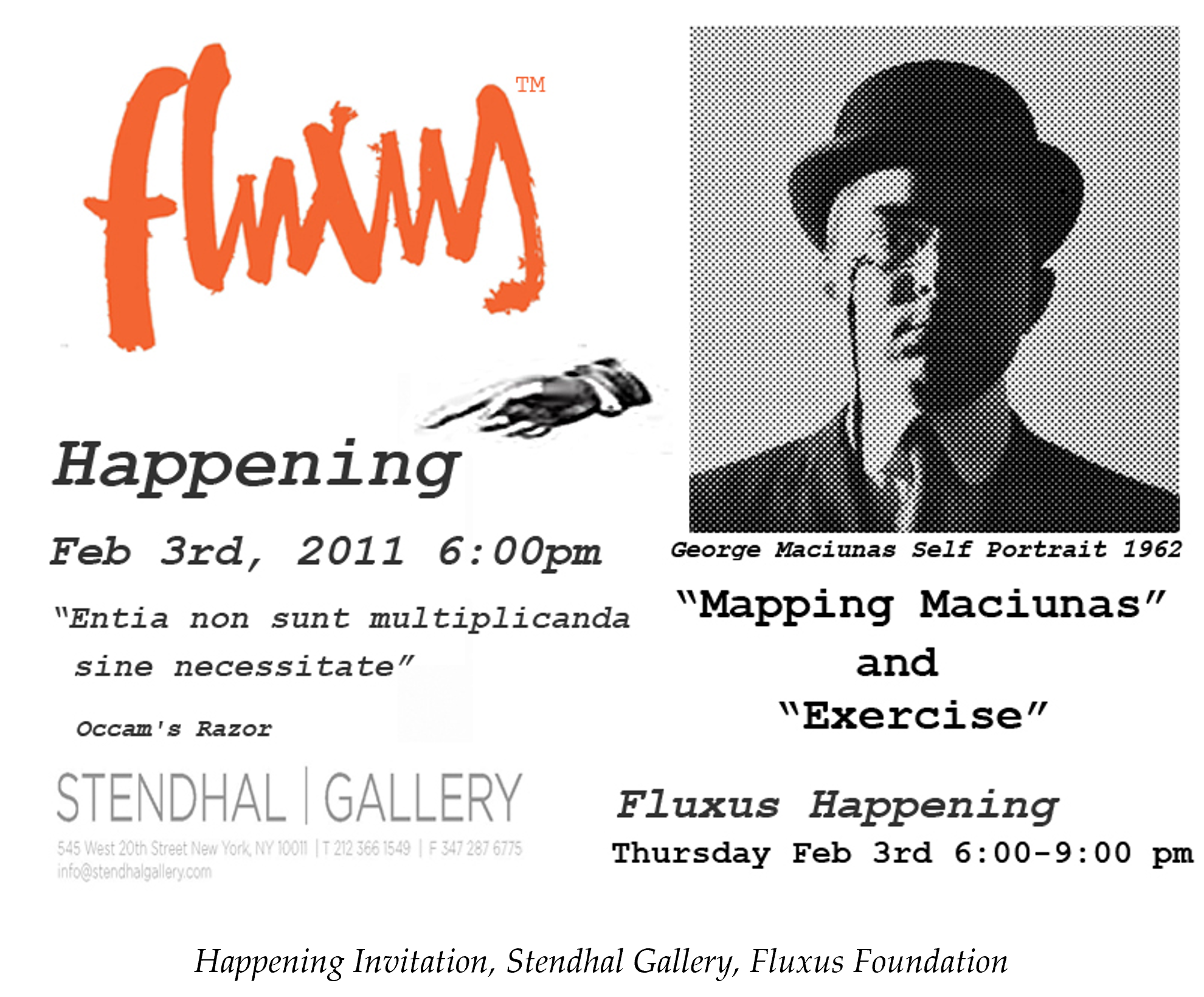
A modernist corollary to the idea of spiritual intercession through objects could be the Fluxus movement of the 1950s, early 60s. Here, art becomes a tactic to undermine consumerism and encourage anti-organization men. But instead of making or finding objects the artists staged events, or happenings, meant to disrupt or discontinue rational, mundane thought. This could take the form of a ChatGPT answer to my question: give me an example of an event or happening that creates a sense of discontinuity?:
“One actual Fluxus-associated work that produces this kind of effect is Nam June Paik’s early performances in which he would suddenly:
• Cut a performer’s tie
• Smash a violin
• Pour shampoo over someone’s head
“These abrupt, almost shocking gestures shattered the expected flow of a concert and forced the audience to confront the instability of the event itself.
“Another related precedent is John Cage’s 4′33″, where the performer sits in silence. The ‘music’ becomes ambient sound — a radical discontinuity from conventional composition.”
And if we double back on The Deposition the similarities are striking. Prince’s relics are mass-produced objects transformed through some kind of spiritual osmosis into images within the minds of believers. But, unlike Fluxus happenings, they are commodities that sell for millions of dollars. Prince himself is a kind of “star.” A living being who nevertheless seems somehow part of another world. Not a coherent spiritual world, mind you, but a material one.
And therefore, the outcome of these performances and objects seems to be a kind of drilling down into the labyrinth of regulations, laws, cross examinations and a 6 1/2 hour recording. There is no relief, no release from this world into another. The Deposition does not aid in the manifestation of a divine being. The sacred, something untouchable and eternal, cannot appear.
The Deposition, therefore, becomes symbolic to the Modernist mind; that insincerity is a point of pride, and subversion of sincere belief the central motif. Not only that but objects themselves are only what each individual thinks he/she/they are. Prince thinks he’s an “artist,” the gatekeepers reinforce this thought. He then thinks the object, a shoehorn for example, becomes an image that transcends its mundane purpose, simply because he and other clued-in authorities agree on this.
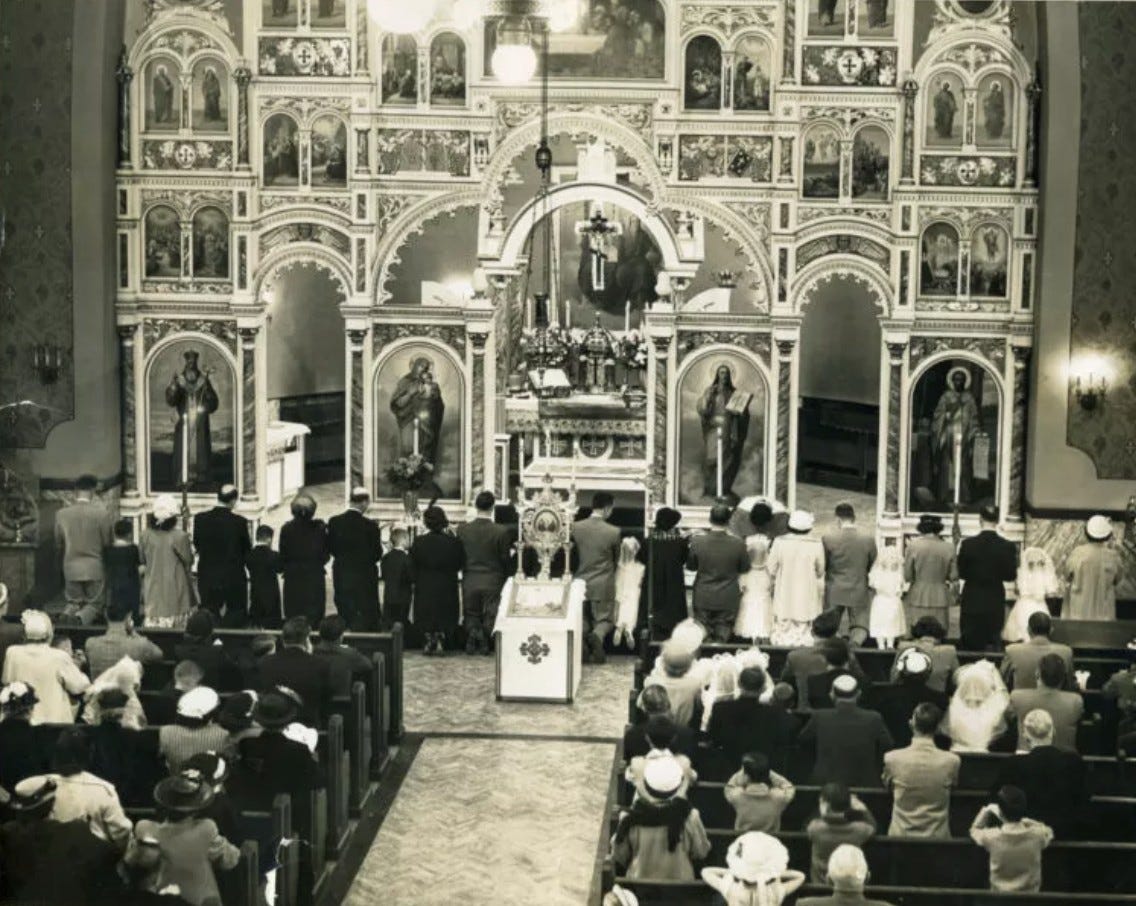
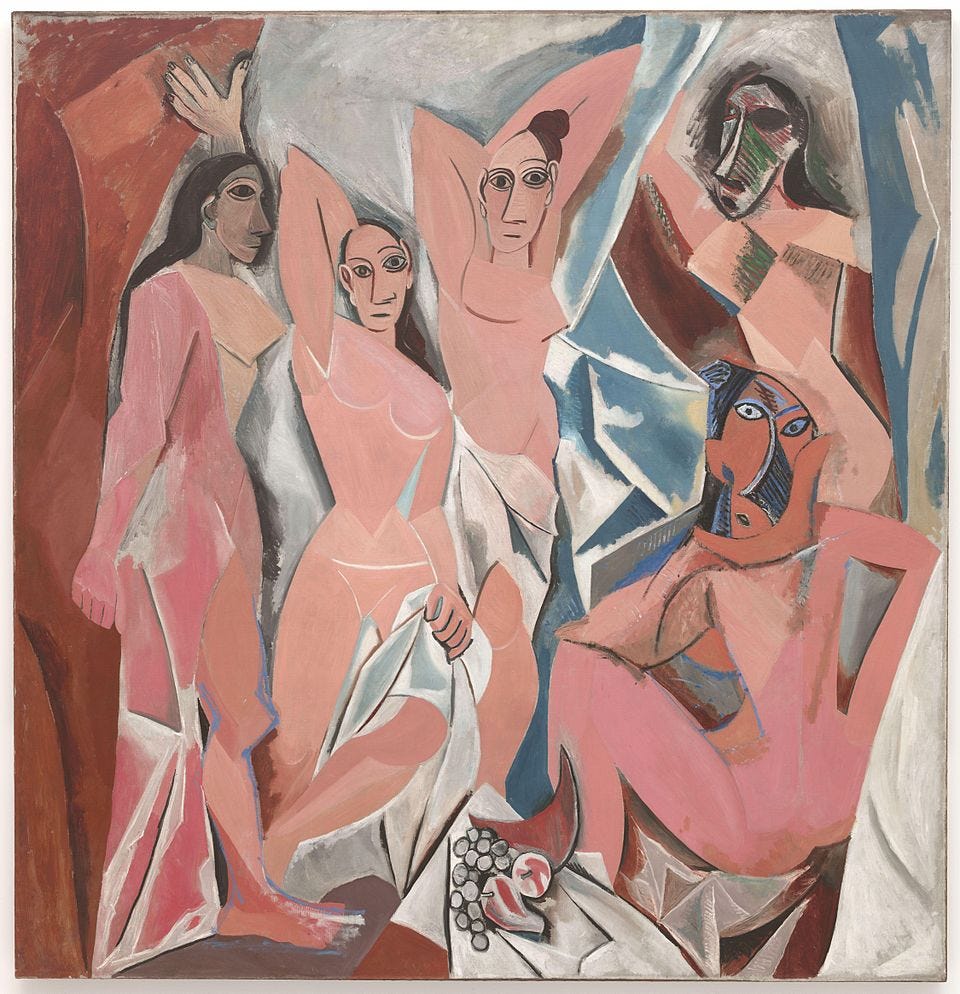
But, if the viewer is not clued-in, not part of the in-crowd – the object remains merely a shoehorn – he becomes a “square.” Someone beyond the pale, morphing materially (because there is no other world). To quote Aldous Huxley, “People would rather be taken in adultery than provincialism.” Not just a different set of beliefs but a strange kind of heretic. The “square” who also believes in another world can as well appear naive and superstitious like any Westerner before, say, 1907, the year Picasso painted Les Damoiselles d’Avignon.
I like Ezra Pound’s definition: Culture is what’s left over after you forgot what you tried to learn. So, culture is learned instinct.
In my interpretation, you can’t actually look straight at culture (or God) because doing so destroys the instinctive response of desire and fear for whatever is sacred to you (or to the dominant group).
You can examine contemporary artifacts; and try to find out where all the energy and money goes. I’m not saying this describes an individual’s culture, mind you. Just the overall culture you are swimming in.
For instance, take pop, the dominant cultural form. Andy Warhol, in his Philosophy from A to B and Back Again, said he would like to sell “stars’” underwear, $10 for washed and $15 for unwashed. Paradoxically, I would consider him a pretty good artist in formal terms even though his content is banal.
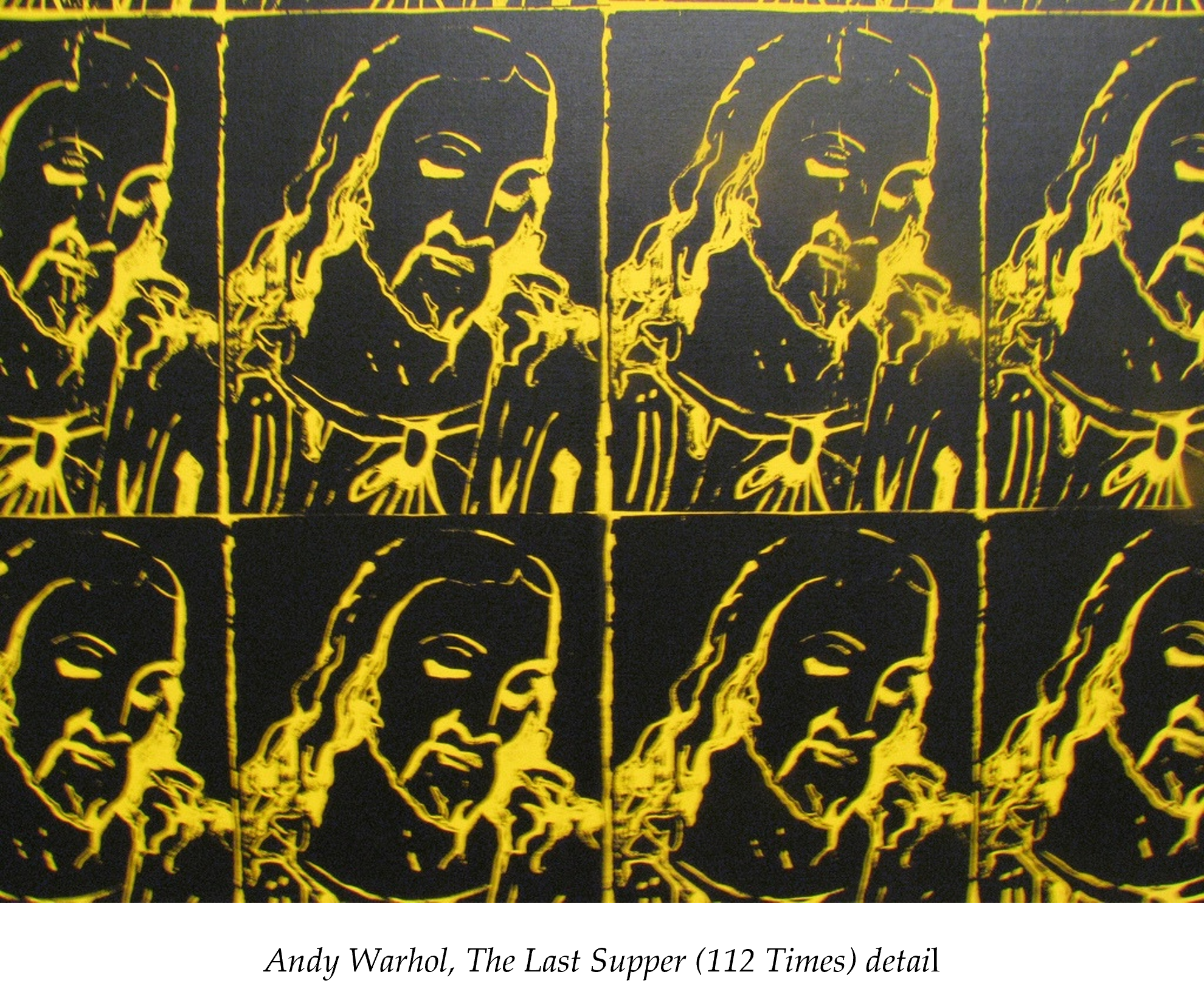
And so, I’d suggest that an artist, or anyone for that matter, try to understand what beauty is. At least that’s where I’m at. Suddenly one realizes that beautiful things are harder to make than ugly things. And form is more important than content. Warhol is interesting in this regard because he was commenting on trite objects but could simultaneously make some beautiful images. Surprisingly, he also made the largest number of Christian paintings of any 20th century artist and attended the St. John Chrysostom Byzantine Catholic Church growing up in Pittsburgh. But his Christian paintings are suppressed by the Modernist establishment and few are aware of them.
Discontinuity is not necessarily a bad thing. During the Renaissance, for example, men of high status and enquiring minds might use a cabinet full of small drawers with various objects or notes placed within them. By opening random drawers the unexpected combination of revealed objects might jar the individual’s mind into new patterns of thought. Leonardo Da Vinci once wrote how throwing a wet rag or sponge onto a wall creates accidents that may suggest further development into a more coherent image. This could help tell a story or make a pleasing form.
Artists have exploited accidents forever. Artists even steal from one another. It’s cultural transmission and a good thing. The problem that Richard Prince illustrates is how image stealing becomes not so much flattery to the original maker but just the opposite.
In order to further understand the Modern sense of irony in the use of found objects it will be necessary to examine the beginnings of the modern museum.
The following paragraphs on the Renaissance are from my reading of an excellent book I highly recommend by Joscelyn Godwin, The Pagan Dream of the Renaissance.
STUDIOLO
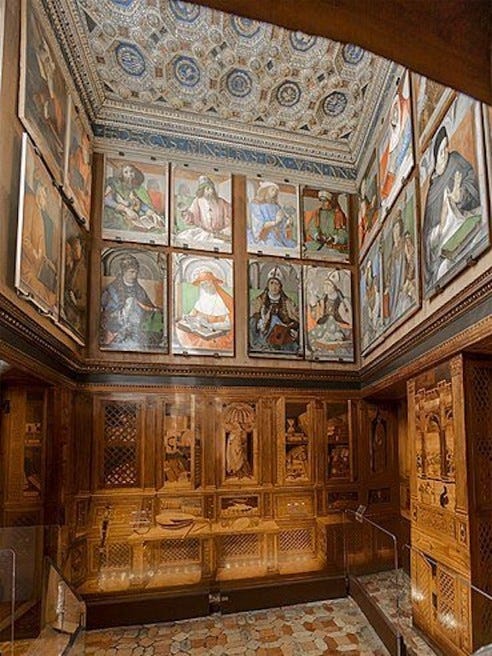
In the 15th century certain Italian nobles began constructing a small, high-ceilinged room in their palaces which became known as the studiolo, for the sole purpose of metaphysical contemplation. They were decorated with wall paintings and flat woodworks. These woodworks, called intarsia, were highly accomplished adaptations of, I assume, Pompeian-style architectural fantasies with skillfully rendered vanishing points and horizon lines, unlike earlier flat Christian images.
Cicero had suggested that images of the Muses and morally inspiring gods such as Apollo appear in one’s study. In 1447, Leonella d’Este seems to have been the first of these nobles to install such images in his studiolo. The panels were depictions of 9 Muses, of which 5 survive. After Leonella died in 1450, the original tempera panels created by Angelo da Siena were repainted by Cosimo Tura using oil.
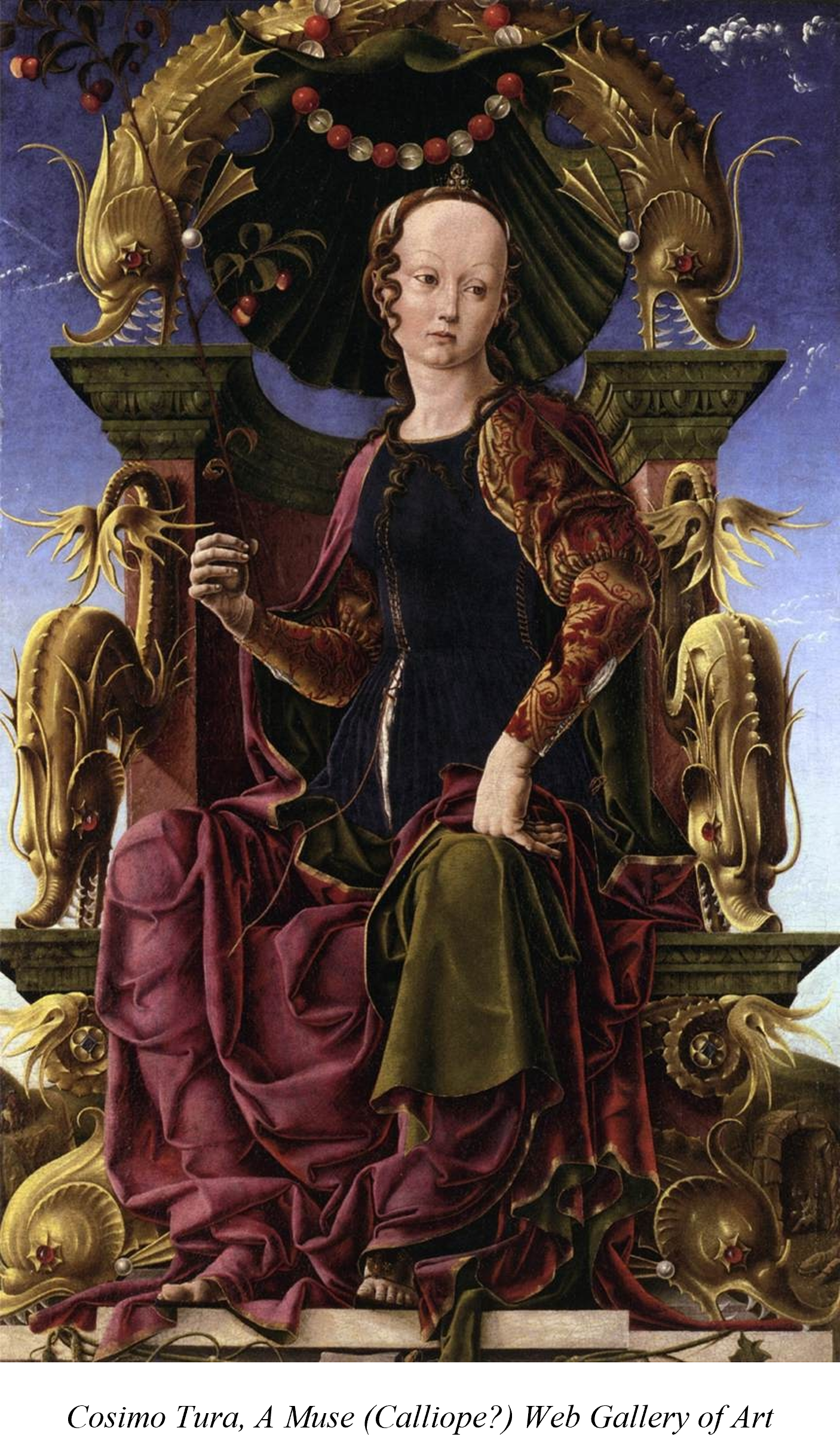
In this studiolo, either of the two successors to Leonella, Duke Borso d’Este (reg. 1450-71) or Ercole I commissioned the repainting. All nine Muses were painted over by Tura. They also broke with Christian tradition by appearing as either palace ladies or high-class prostitutes, according to Tura scholar Stephen Campbell. Artists were now attempting to seduce the viewer into a more Earthly inspiration within the confines of the studiolo.
Piero Cosimo de’ Medici (1416-69) had a studiolo in a Florentine palace on Via Larga. It contained intarsia panels, enameled terracotta reliefs of the Four Seasons, twelve roundels of labors of the months and signs of the zodiac. In other words, the images range from material earth to celestial heaven. Apparently the colors went from the monochromatic perspective illusions at bottom to brightly colored spiritual beings above. The eye’s movement from monochrome to color, low to high, suggested that the real world lay beyond the shadows of Plato’s cave.
In most cases, the studiolo (especially the most intact one at Urbino) reflects a complementary paring of pagan Greece with Christianity. Federico de’ Medici’s studiolo combined the mythic past with a more scientific present, however.
WUNDERKAMMER and KUNSTKAMMER
In German-speaking lands the Wunder- or Kunstkammer (cabinet of marvels or art) seem to have been inspired by the studiolo. But the studiolo is defined more by form while the former its contents. Wunderkammer and Kunstkammer morphed into the modern natural history and art museum. The studiolo led to exquisitely decorated rooms. Wunderkammer tended towards natural objects like rare minerals, preserved creatures and natural oddities meant to provoke awe and wonder in the natural world. Kunstkammer were collections of man-made objects such as paintings, sculpture, scientific instruments and luxury items like jewelry. But, it seems the distinction was vague, and such rooms could be called either term. Either could represent the assembling of disparate natural and artificial things into a symbolic whole. The same concept could also define a studiolo but with a difference.
For example, Piero de’ Medici began the family collection of rare and beautiful objects. This went on until the 18th century. When Eugenio Battisti refers to 250 Wunderkammer in Italy alone in his monumental study of Mannerism he would be referring to the beginnings of the museum but not the studiolo.
Jacopo Strada (1515-88) introduced the Kunstkammer into the German-speaking world from Italy. He originally worked for Giulio Romano as a goldsmith! He became the official supervisor of the Emperor Maximilian II’s Kunstkammer.
During this period Maximilian employed Giuseppe Arcimbaldo, famous for his paintings of human heads symbolizing pagan representations of virtues, vices and seasons; using a hallucinatory arrangement of plants, animals and other natural objects.
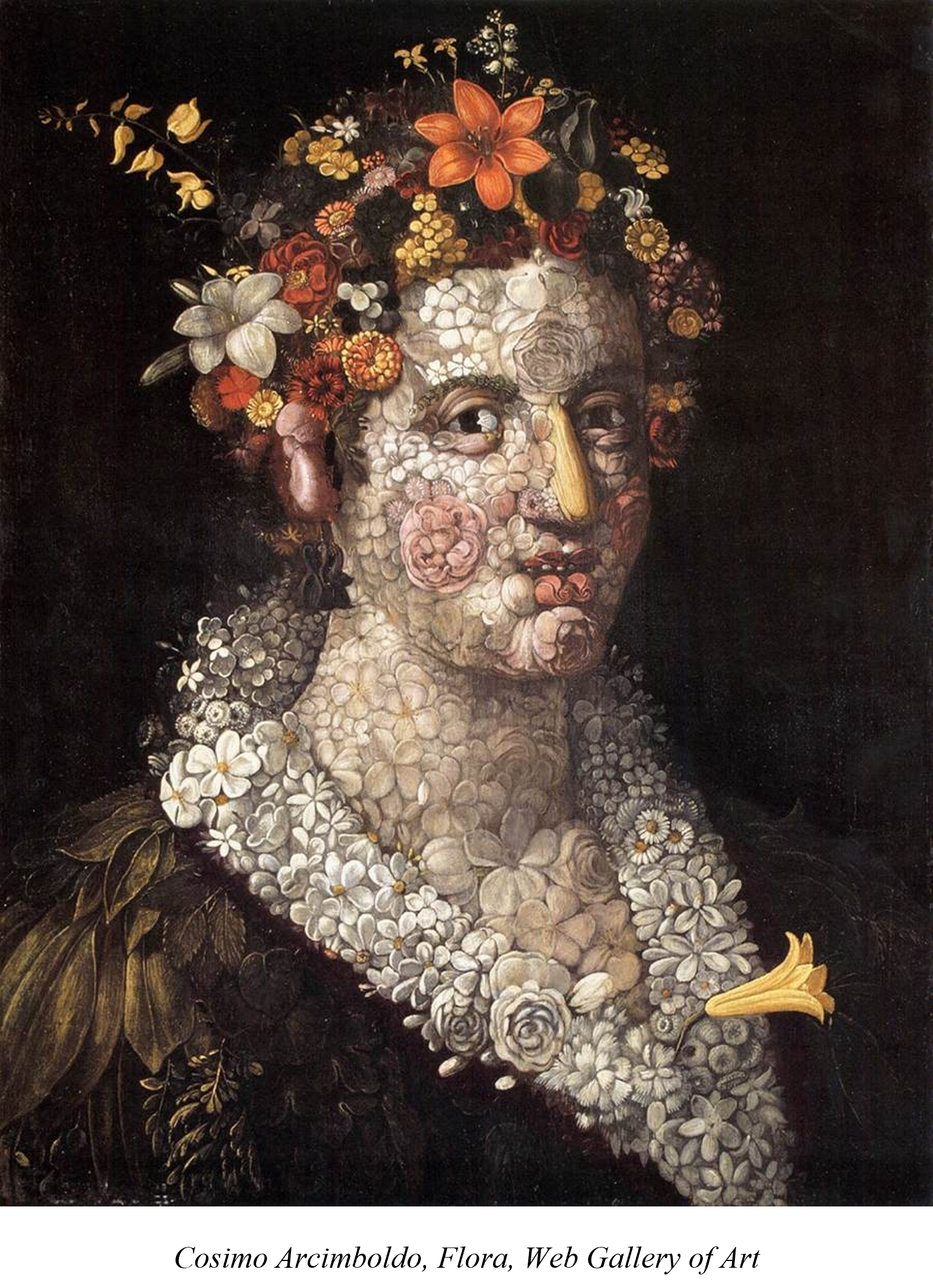
Arcimboldo’s composite portraits mirror the logic of the Kunstkammer—assembling disparate natural and artificial things into a symbolic whole originally orchestrated in studioli. In the studiolo the nobleman attempted to immerse himself in the aura of a divine order, inspired by the ancient pagan gods of Europe. In the Wunder- or Kunstkammer the goal was toward a kind of magical awe found in the natural world. And this would specifically work with the Kunstshrank.
It’s possible at this point to speculate that – with the two artists coordinating – we have a combination of the studiolo (visual contemplation of metaphysical hierarchy - form) and the Kunstkammer (collection of remarkable objects - content) resulting in the Kunstshrank – a finely crafted cabinet with many drawers and hidden compartments, specifically designed to hold rare and curious items.
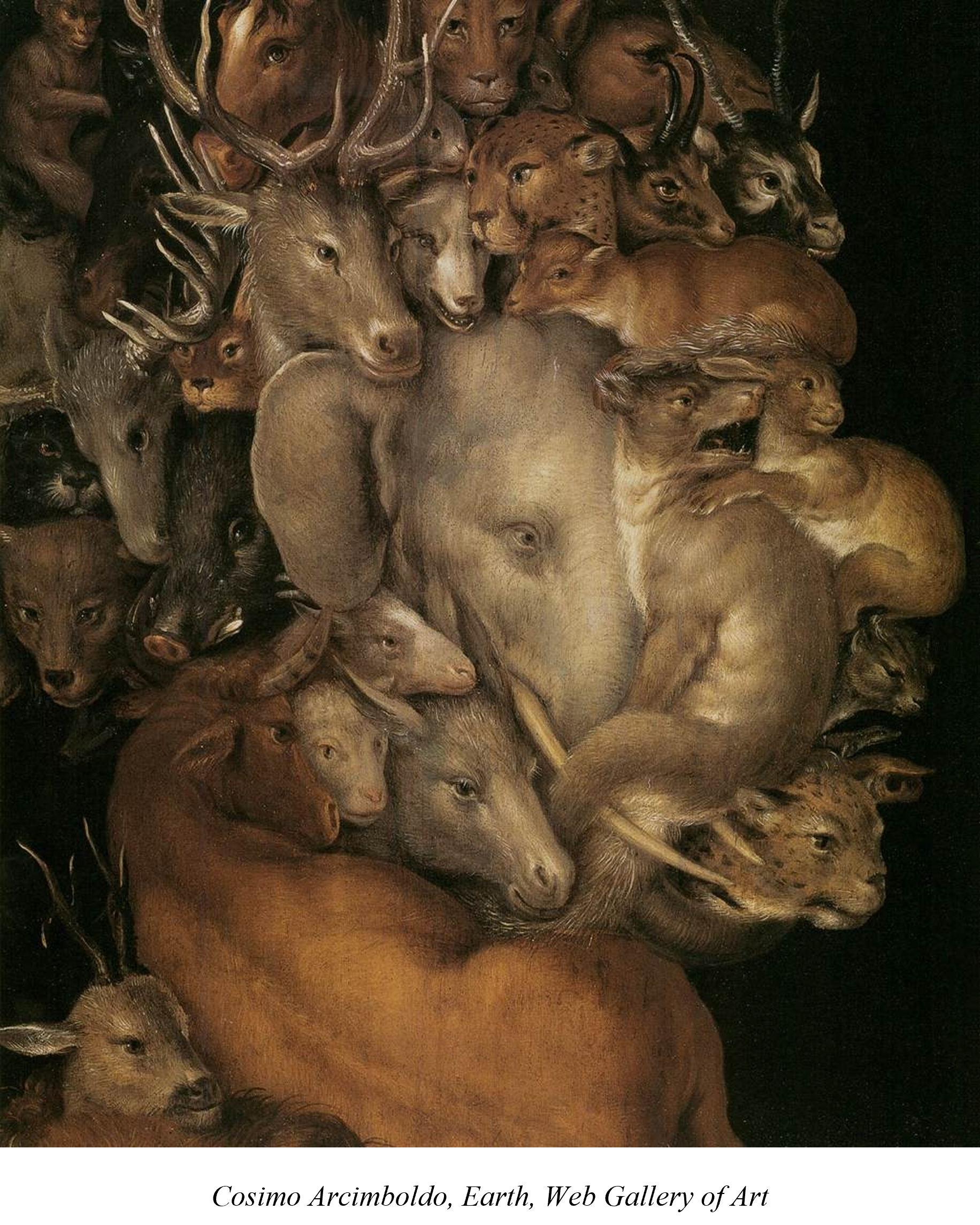
Arcimbaldo, like many such artisans of his time, also designed pageants, costumes, interior decorations and even a “color harpsichord.” This familiarity with hands-on application would allow him or others like him to construct a mechanism for discontinuity. But, unlike the modern art movements of Dada, Surrealism, Fluxus, etc., the discontinuity in the Renaissance tended to be contained within the bounds of divine order: vanishing points and horizon lines, the Muses, the gods and the zodiac.
Arcimboldo’s composite portraits (made of plants, animals, objects) mirror the logic of the Kunstkammer—assembling disparate natural and artificial things into a symbolic whole originally orchestrated in studioli. Below is an example of Earth (Elements) to Autumn (Seasons), top and Winter to Water, bottom.
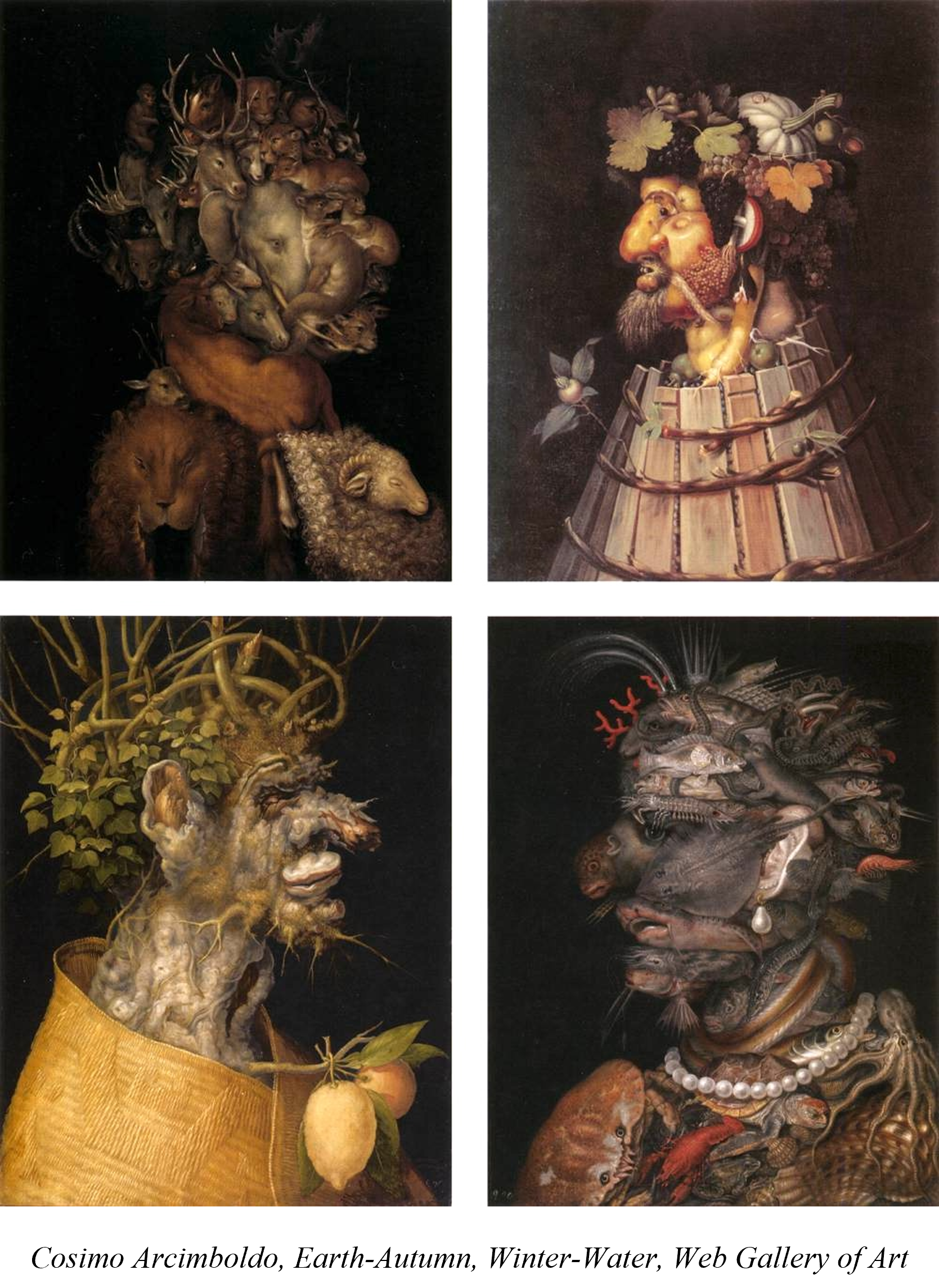
Most likely the studiolo, which historically came first, established the overall philosophical approach: horizontal layers beginning with earthly images supporting increasingly spiritual abstractions, and objects, ending with the zodiac or relics at the top. But all retain the aura of divine presence.
In summary, the Kunstkammer and Wunderkammer were inspired by the pagan metaphysical symbolism of the studiolo and then added a more scientific but oddly assorted collection of wonders meant to astonish and surprise. “Creativity” in and of itself cannot aid in the manifestation of divine aura which is eroded into emptiness and irony. But the mechanism, the Kunstshrank of modernist discontinuity, remains.
Artists, curators, critics and patrons of the arts might want to look to the studiolo as a possible template for a new story-telling alchemy: stories consisting of melodies that harmonize with thousands of years of a God-given desire for meaning and order, rather than empty gestures. Far from being exercises in nostalgia, the new art should seize on the power of ancient symbols, and use modern technology as a tool, rather than be used by it. Perhaps then it may begin ridding itself of alienating oikophobia and reclaim its sacred space, space that cannot be defiled.
Alex Syd is a pseudonym used by an artist who has acquired extensive knowledge of the art establishment, and also of those who toil in the fields of obscurity. He has lived and worked in Asia and Europe, and currently resides on the Chesapeake Bay.
“Oikophobia” is a brilliant coinage. Thanks for introducing me to it :)
I suggest proofreading before publishing. “Altar” is misspelled as “alter” three times before I paused my reading.