

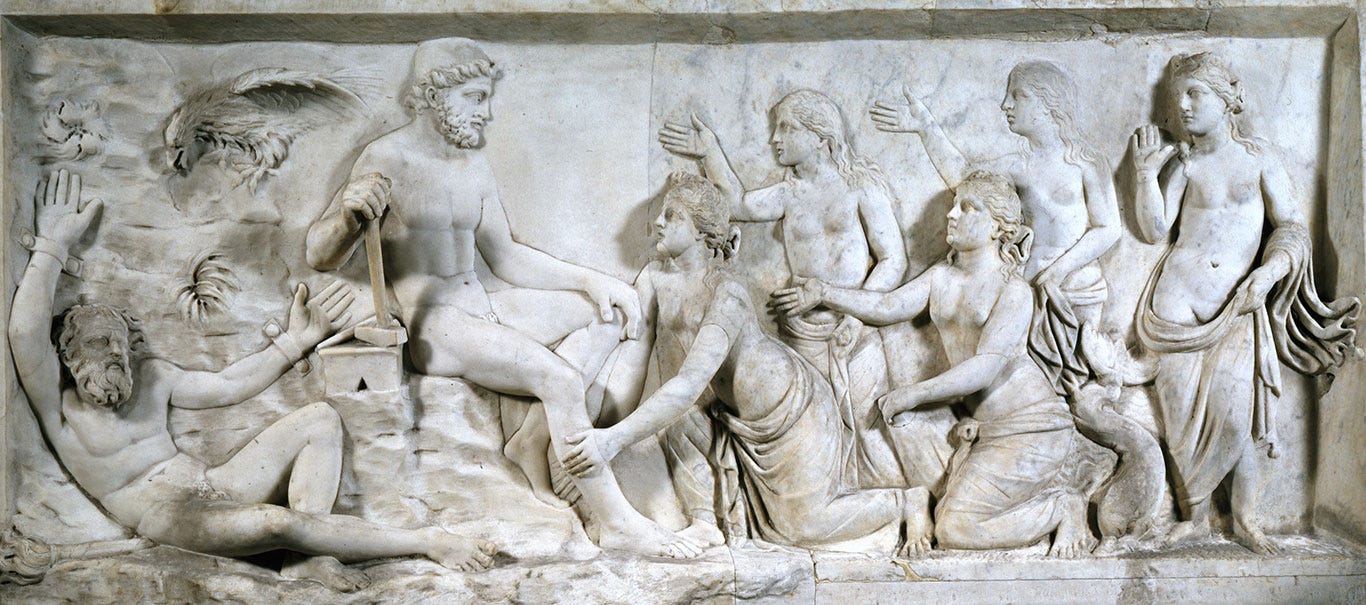
Prometheus stole from Heaven the sacred fire
And swept to earth with it o’er land and sea.
He lit the vestal flames of poesy,
Content, for this, to brave celestial ire.
Wroth were the gods, and with eternal hate
Pursued the fearless one who ravished Heaven
That earth might hold in fee the perfect leaven
To lift men’s souls above their low estate.
But judge you now, when poets wield the pen,
Think you not well the wrong has been repaired?
'Twas all in vain that ill Prometheus fared:
The fire has been returned to Heaven again!
We have no singers like the ones whose note
Gave challenge to the noblest warbler’s song.
We have no voice so mellow, sweet, and strong
As that which broke from Shelley’s golden throat.
The measure of our songs is our desires:
We tinkle where old poets used to storm.
We lack their substance tho’ we keep their form:
We strum our banjo—strings and call them lyres.
Paul Laurence Dunbar was born on June 27, 1872, to two formerly enslaved people from Kentucky. He became one of the first influential Black poets in American literature and was internationally acclaimed for his dialect verse in collections such as Majors and Minors (Hadley & Hadley, 1895) and Lyrics of Lowly Life (Dodd, Mead and Company, 1896). The dialect poems constitute only a small portion of Dunbar’s canon, which is replete with novels, short stories, essays, and many poems. In its entirety, Dunbar’s literary body is regarded as an impressive representation of Black life in the turn-of-the-century United States.

Excellent essay. Very well written and informative.